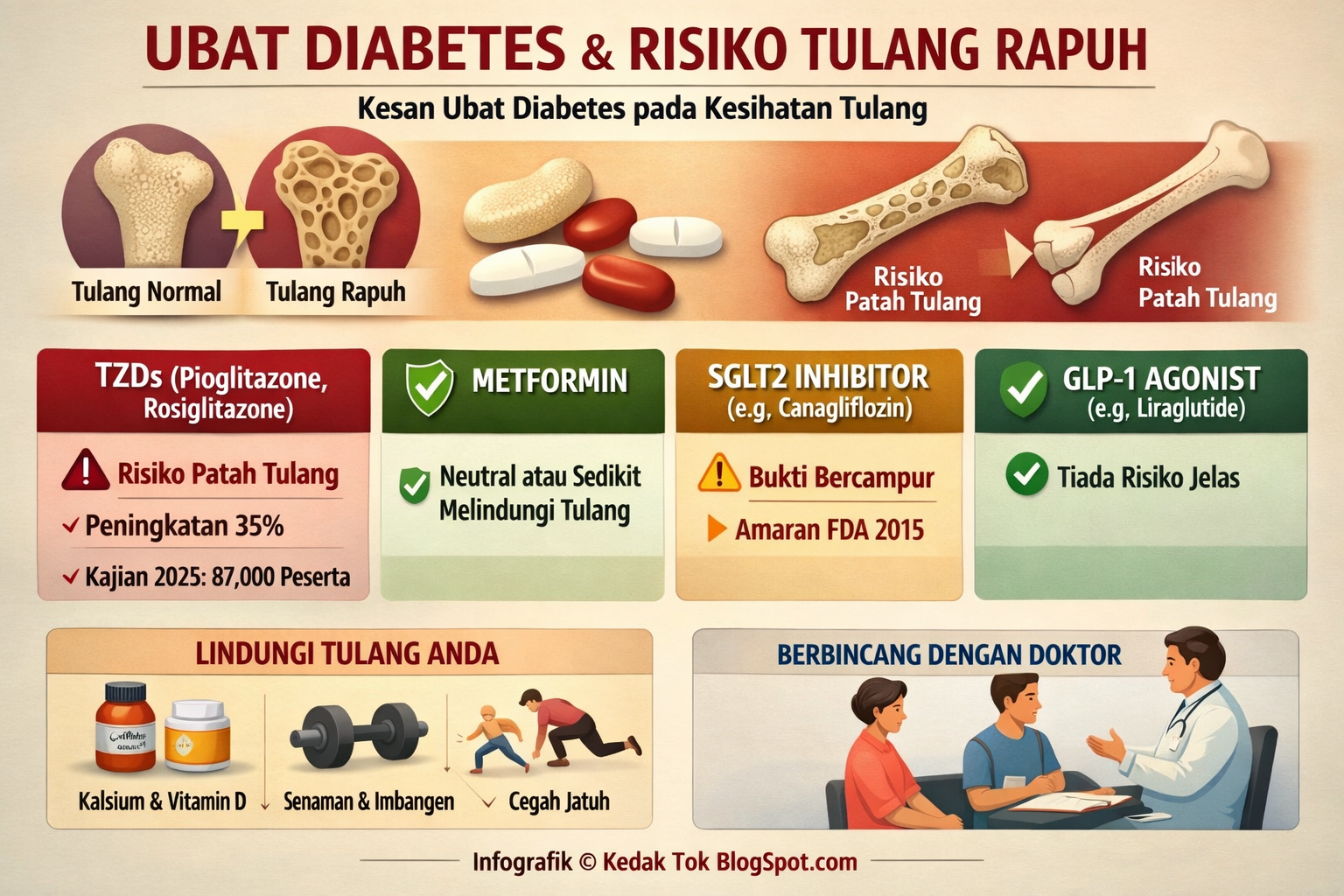
Infografik © Kedak Tok BlogSpot.com - Ubat Diabetes dan Risiko Tulang Rapuh
💊 Diabetes Medication and Brittle Bone Risks
Managing diabetes almost always involves medication. These drugs are essential for controlling blood sugar and preventing serious complications. However, not all diabetes medications treat your bones equally. Some are safe, some may be protective, and others — under certain circumstances — can increase your risk of fractures. Every patient and caregiver deserves to understand which category their medication falls into.
This article is the second in our series. Our first article covered how diabetes itself weakens bones through internal changes in bone quality and increased fall risk. Here, we focus specifically on the medications.
🔴 The Biggest Concern: TZDs — Pioglitazone & Rosiglitazone
Thiazolidinediones, or TZDs, are a class of diabetes medications that help the body use insulin more effectively. The two main drugs in this group are pioglitazone and rosiglitazone.
A major 2025 review published in Frontiers in Pharmacology — covering 78 clinical trials and nearly 87,000 patients — found that TZDs are associated with a significantly higher risk of bone fractures compared to other diabetes medications.
- Women, particularly postmenopausal women — 56% higher relative fracture risk
- Non-diabetic stroke survivors — 41% higher relative fracture risk
- Patients using TZDs for more than two years
There is a second concern with pioglitazone specifically: a possible link to bladder cancer. The evidence remains inconclusive and debated, but it has led to the drug being withdrawn from some countries and closely monitored in others. If you are currently on pioglitazone, this is another topic to raise at your next medical visit.
🟩 The Safer Options
Metformin, the most widely prescribed diabetes medication in the world, is generally considered neutral or mildly protective for bone health. Current evidence does not suggest it increases fracture risk — a reassuring finding for patients also worried about their bones.
GLP-1 receptor agonists — a newer class that includes semaglutide, liraglutide, and dulaglutide — help control blood sugar and often assist with weight loss. Current evidence suggests they do not significantly harm bone health, though long-term data is still being gathered.
SGLT2 inhibitors — including dapagliflozin, empagliflozin, and canagliflozin — show mixed results. Canagliflozin (Invokana) specifically carries a U.S. FDA safety warning for increased fracture risk, issued in 2015. For the other drugs in this class, evidence is less clear. Discuss with your doctor if you are on any SGLT2 inhibitor and are concerned.
🟨 The Indirect Risk: Falls from Low Blood Sugar
Insulin and sulfonylureas — older medications such as glibenclamide and gliclazide — do not directly damage bone tissue. However, they can cause episodes of low blood sugar (hypoglycaemia), which leads to dizziness, unsteadiness, and falls. Falls lead to fractures. Careful blood sugar monitoring is essential, particularly if you are elderly or live alone.
The single most important action: do not stop or change your medication without talking to your doctor first. Sudden changes can cause dangerous blood sugar swings.
At your next medical visit, ask your doctor:
- Is my current diabetes medication affecting my bone health?
- Am I in a higher-risk group — based on my age, sex, or medical history?
- Should I be taking calcium and vitamin D supplements?
- Do I need a bone density scan?
Diabetes medications are not all the same when it comes to bone health.
TZDs (pioglitazone and rosiglitazone) carry the highest fracture risk — particularly for women, stroke survivors, and long-term users. Pioglitazone also has an unconfirmed but concerning link to bladder cancer.
Metformin and GLP-1 agonists are generally the safer choices for bones.
SGLT2 inhibitors are a mixed picture — canagliflozin has a specific FDA warning.
Insulin and sulfonylureas carry indirect fracture risk through falls caused by low blood sugar.
The right medication for you depends on your full health picture — not just your blood sugar numbers. An informed conversation with your doctor is your most important next step.
Healthy bones, balanced blood sugar, informed choices — a partnership for life.
📚 References
Key Study:
FDA Safety Information:
Previous Article:
Kedak Tok BlogSpot — Understanding Diabetes and Brittle Bone Risks
Wallahu a'lam
Ulasan
Catat Ulasan