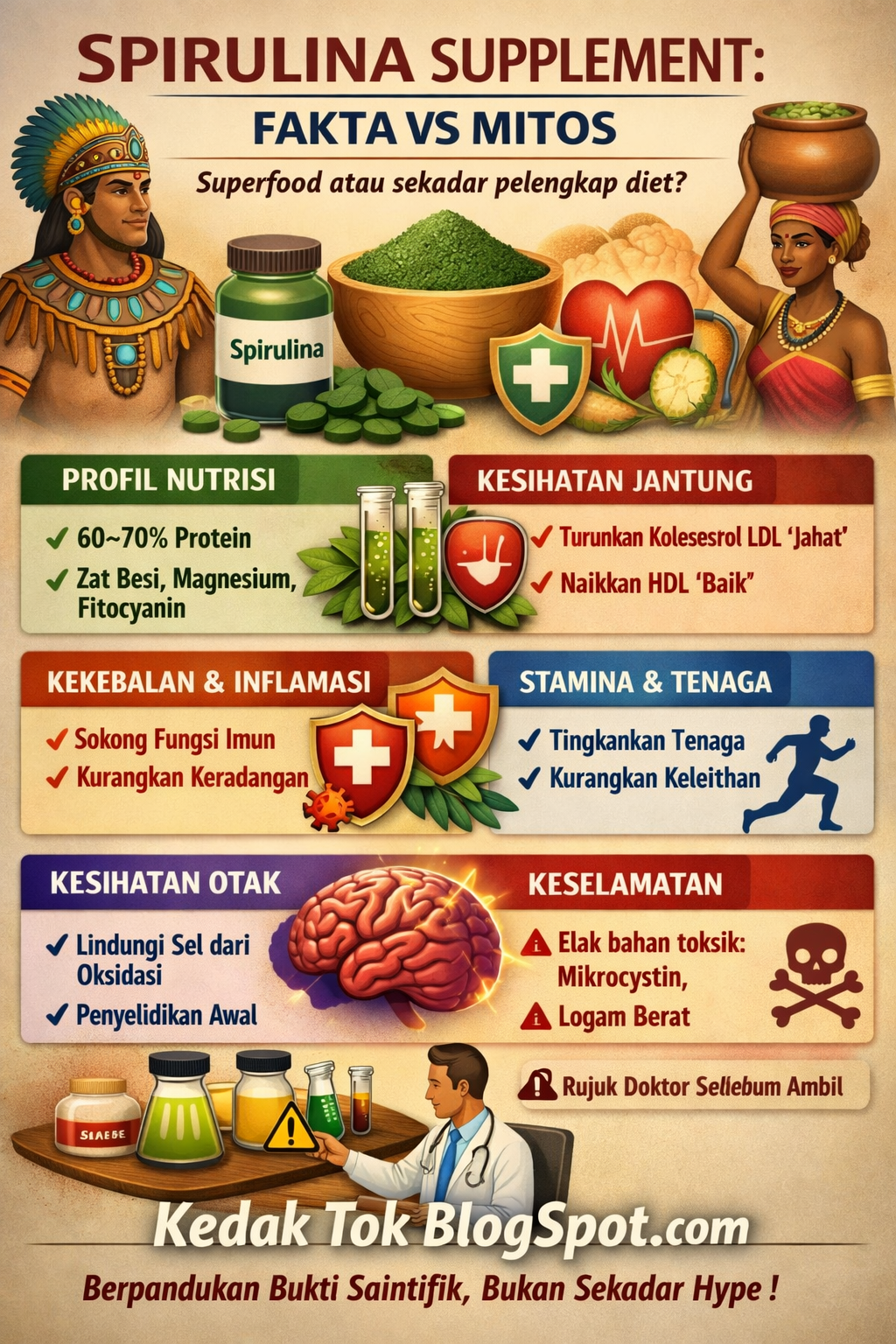
Infografik © Kedak Tok BlogSpot.com — Spirulina: Fakta vs Mitos
Spirulina is a blue-green microalga that has been consumed for centuries, including by Aztec communities and populations in Africa.
Today, it is widely marketed as a nutrient-dense dietary supplement.
While spirulina contains a range of nutrients, its health effects should be understood based on current scientific evidence rather than marketing claims.
💪 Nutritional Profile
Spirulina is composed of approximately 60 - 70% protein by dry weight.
It contains essential amino acids, although not always in ideal proportions compared to animal-based proteins.
It also provides iron, magnesium, potassium, and bioactive compounds such as phycocyanin, which has antioxidant properties.
These nutrients contribute to its value as a supplement, particularly in populations with limited dietary variety.
❤️ Cardiovascular and Metabolic Effects
Some clinical studies suggest that spirulina supplementation may help reduce LDL cholesterol and triglycerides, with modest increases in HDL cholesterol.
There is also limited evidence indicating potential improvements in blood glucose control.
However, these effects vary between individuals and are generally modest.
Spirulina should not replace prescribed treatments for conditions such as high cholesterol or diabetes.
🛡️ Immune and Anti-Inflammatory Properties
Laboratory and small-scale human studies indicate that spirulina may influence immune function and reduce markers of inflammation.
These findings are still being studied, and more large-scale clinical trials are needed before firm conclusions can be made.
⚡ Energy and Physical Performance
Spirulina contains iron and protein, which are important for energy metabolism.
Some research has explored its potential role in improving exercise performance and reducing fatigue, but results are inconsistent.
Its benefits in this area are not yet well established.
🧠 Cognitive and Long-Term Health
Early research suggests that antioxidant compounds in spirulina may help protect cells from oxidative stress.
However, claims related to cognitive protection or anti-aging effects remain preliminary and require further scientific validation.
⚠️ Safety and Considerations
Spirulina is generally considered safe when sourced from reputable manufacturers.
However, contaminated products may contain toxins such as microcystins or heavy metals.
Individuals with autoimmune conditions, phenylketonuria, or those taking certain medications should consult a healthcare professional before use.
Pregnant and breastfeeding individuals should also seek medical advice before taking supplements.
| Component | Evidence-Based Role |
|---|---|
| Protein | Supports general nutrition |
| Iron | Helps prevent iron deficiency |
| Phycocyanin | Antioxidant activity |
| Micronutrients | Supports normal metabolic functions |


Nang bagus tok!
BalasPadam